
Sleepless in Olympia
This week's question comes from a reader who knows something precious — what it feels like to sleep well — and has recently started to lose it.
Dear Yoga Therapist,
I've never had much trouble sleeping in my life, but I've noticed lately that I'm waking up at night and/or having trouble falling asleep due to uncomfortable sensations in my legs. This can feel like a tingling in my feet or like electric currents running from my feet to hips or in the opposite direction. What can I do to help calm this restlessness in my legs so I can sleep?
Thank you for your advice,
Sleepless in Olympia"
Dear Sleepless,
Let's throw a question out there and see how it lands. What is this restlessness trying to move through me?
I bet there is a lot of wisdom in your own answer. And that's where I want to start. Not with a list of poses, not with a breakdown of what restless leg syndrome is, but with that question and your own accompanying knowledge. Because what you're describing, the electric currents, the tingling, the restlessness that arrives precisely when you lie down to rest, is something named over two thousand years ago in the Yoga Sutras.
The sutra being referenced comes after a description of the obstacles to our practice, and it lists the results of sitting too long in those obstacles. They are named as pain or constriction, a poor attitude, trembling limbs, and disturbed breath. Together, these four symptoms accompany viksepa, the scattered state of mind. Restless, trembling, hyperactive limbs listed not as a diagnosis to be treated, but as one of four signs that something inside is still moving when it needs to settle. A signal. A messenger.
The author is pointing to a bidirectional relationship between the restless body and the restless mind. Mental agitation makes the limbs tremble. That in turn disrupts the deep and smooth flow of breath. And as that deepens, the natural balance of the body is thrown off. Not one causing the other in a straight line, but each amplifying the other. A loop, or perhaps at times – a spiral.
The legs that won't settle at night are also telling us something about unprocessed energy that has nowhere to go when the doing stops and the stillness finally arrives. Patanjali doesn't stop there. The very next sutra offers an antidote: practice returning to one thing. One anchor. One place for the scattered energy to land.
So what does that look like at bedtime?
A short, intentional movement practice before you ask the body to be still — not vigorous, not stimulating, but slow and floor-based and breath-led. A chance for the energy to discharge before it's demanded to disappear.
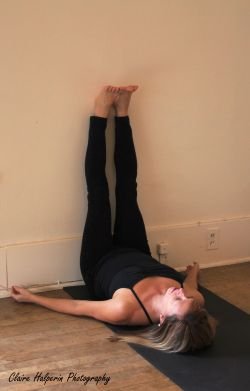
Viparita Karani (Legs Up the Wall) increases blood flow to the legs, provides gentle supported stretching, and allows the muscles to relax. It is also one of the most reliable on-ramps to the parasympathetic nervous system that yoga offers.
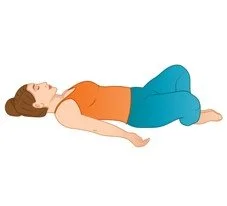
Supta Baddha Konasana (Reclined Bound Angle) opens the hips and reduces tension in the legs. Nothing is asked of you here except to be held by the floor.
Breathing Exercises— particularly Alternate Nostril Breathing, which promotes balance and relaxation, and Ujjayi breath, which calms both the mind and body. The breath is the fastest route back to one thing, one anchor, that most of us have access to.
Yoga Nidra is one of the most well-researched tools we have for nervous system reset. Free Yoga Nidra for sleep link: https://youtu.be/GTxY7D9tQVs
The body already knows how to do this. We are simply creating the conditions.
Avoiding caffeine, alcohol, and tobacco may also help, as they can make symptoms worse.
The restless leg is not your enemy. It is tonight's most honest teacher. (Thank you Guru!) It is showing you exactly where your energy lives, where your nervous system is still vibrating, where mental unrest has shown up in the body. The question is not only how do I make this stop?, although that is a completely reasonable question. The deeper question, the one the practice holds open for you, is this:
What is this restlessness trying to move through me?
You don't have to answer that tonight. You can simply lie down, put your legs up the wall, breathe slowly, and return (repeatedly) to one thing. That is enough.
With love and quieter nights,
Your Y.T.
As always, if you are experiencing new or worsening symptoms, please consult with your physician or a qualified healthcare provider before beginning or continuing any movement practice. Yoga therapy is a wonderful complement to medical care — but it is not a substitute for it.