
Your knee isn't failing you, it's compensating
Injury can change your practice in ways nobody really prepares you for.
Over the past months, the theme of injured knees keeps coming up in our classes. Different stories, different circumstances, but the same quiet undertone.
We noticed the pattern and decided it was time to address it.
The frustration with a body that has changed:
Nobody talks about this part enough. The frustration of showing up to a practice you love and finding that something you once did easily -- now stops you.
This morning for me, it was my balance. I have had rock solid balance forever, but now since a knee injury while skiing, my left leg wobbles beneath me.
Not laziness. Not lack of effort. Just a body that has been through something and needs a different conversation.
That loss is real, and I've sat with this feeling before.
What the knee is usually trying to say:
The knee is rarely where the problem starts. It sits in the middle of a chain. The hips above it and the ankles below it both influence how much load the knee carries.
When either of those areas is restricted or weak, the knee compensates. It absorbs what the surrounding joints can't handle.
In plain terms:
Weak or tight hips force the knee to rotate and stabilize in ways it wasn't designed for
Restricted ankles alter the way force travels up through the leg, landing extra stress on the knee
The pain shows up in the knee because that's where the chain breaks down, not necessarily where the problem lives.
A knee that has been through trauma often develops protective patterns in the surrounding tissue. The hips and ankles adjust around it.
Rebuilding confidence in that area means addressing the whole neighborhood, not just the injury site.
Below are three poses to rebuild trust with your knees.
3 poses to rebuild trust with your knee
These aren't poses to push through. They're poses to listen through. Each one works the areas surrounding the knee rather than loading it directly.
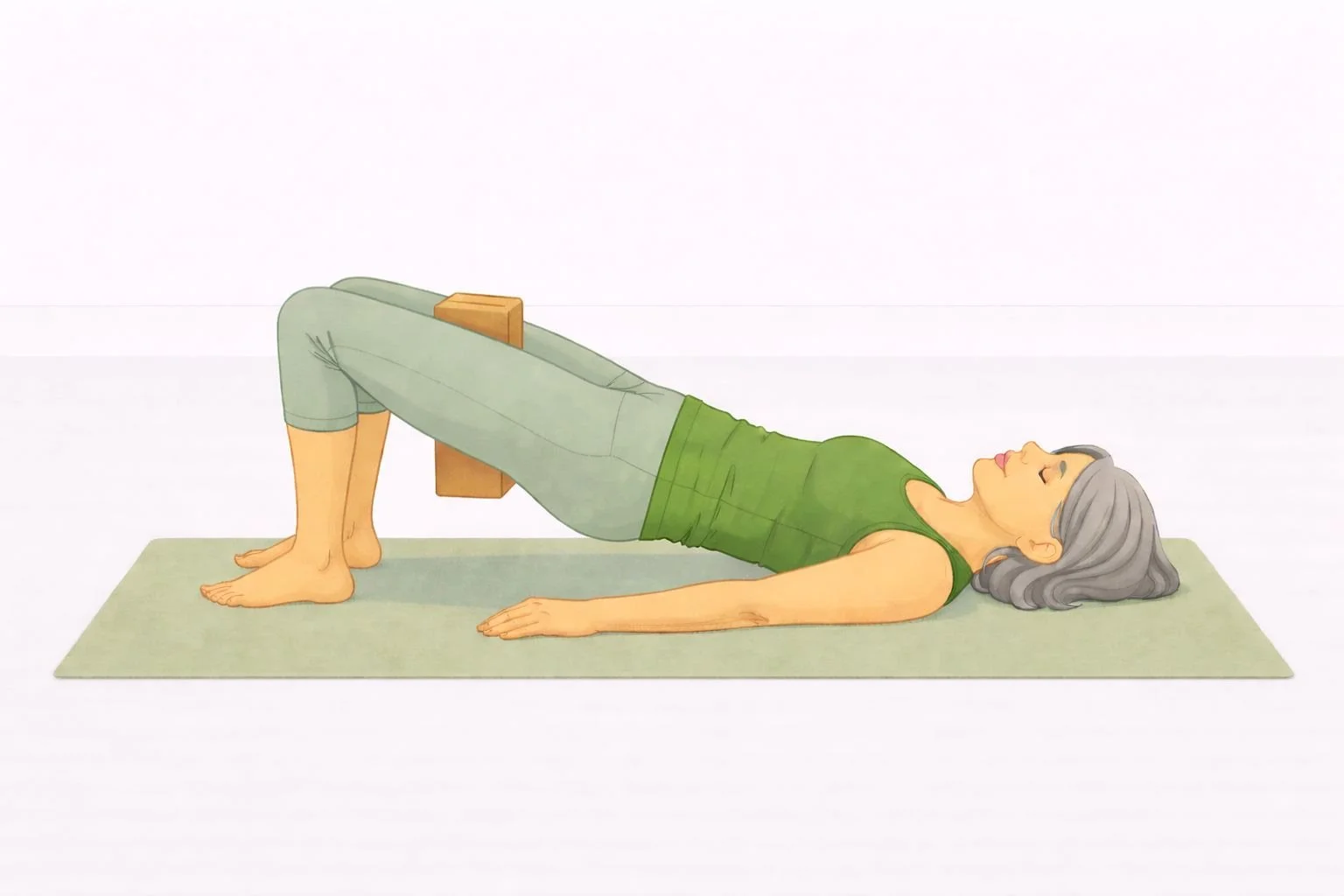
1. Bridge
It activates the glutes and hamstrings; these two should be doing the work, but the knee often takes on the work alone.
How to do it:
Lie on your back, knees bent, feet flat on the floor, and hip-width apart
Press your feet down and lift your hips slowly
Hold for 5 breaths, lower slowly, repeat 3 times
Modifications:
Place a block between your knees to stop them from falling apart.
If lifting feels like too much, simply press your feet into the floor without lifting and notice the glute activation. That alone is useful.
What to notice:
Are your glutes doing the work, or are you gripping through the knee and thigh?
The goal is to feel the effort move upward into the hips.
2. Reclined Figure Four
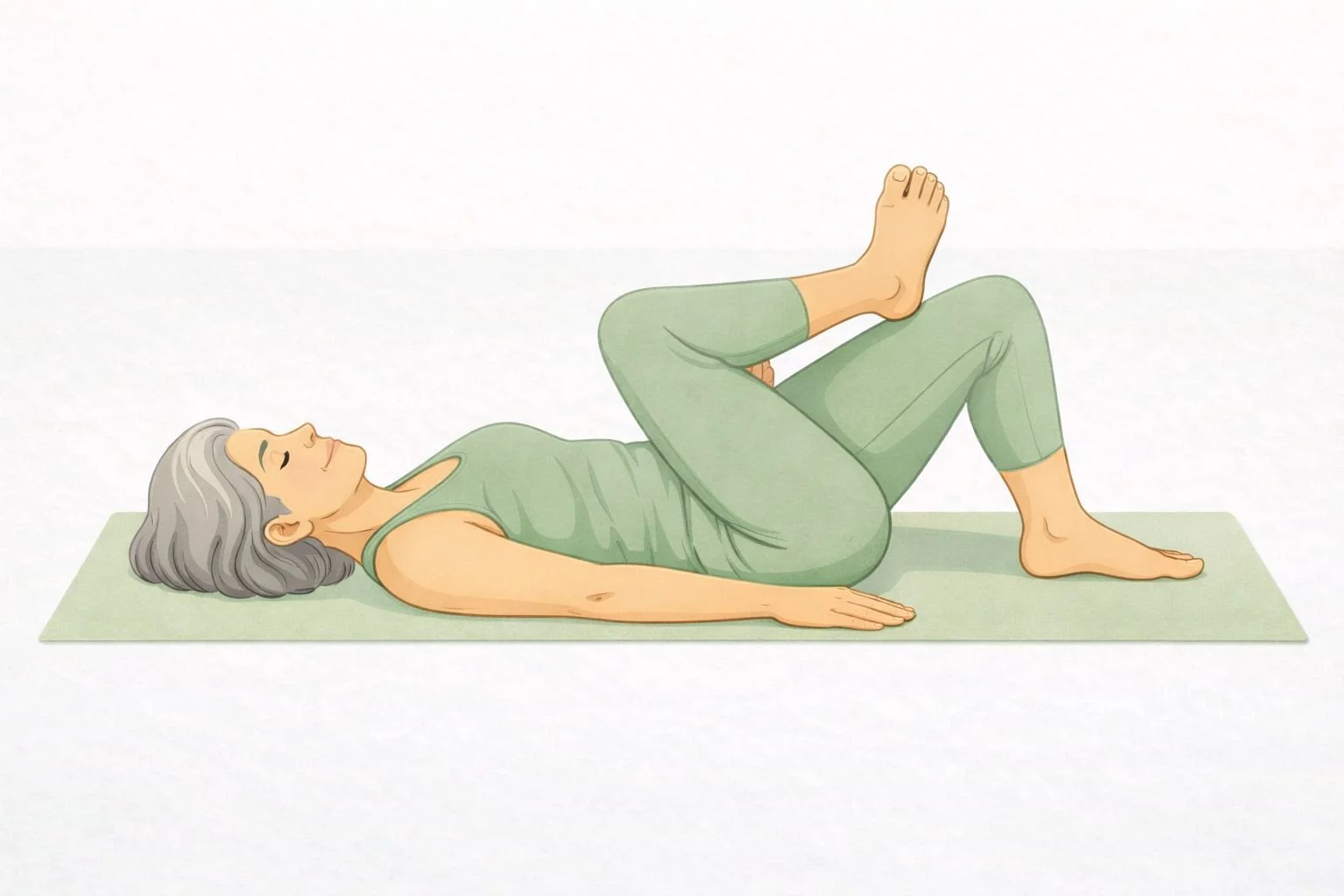
It opens the hip rotators directly, no knee flexion required. This is the hip mobility work that takes pressure off the knee over time.
How to do it:
Lie on your back, both knees bent
Cross your right ankle over your left thigh, just below the knee
Pull your toes back toward your shin to keep the ankle active
Stay here or draw both legs toward your chest for a deeper stretch
Hold for 8 to 10 breaths per side
Modification:
Keep the bottom foot on the floor the entire time, if drawing the legs in creates any discomfort. The stretch is still there.
What to notice:
Where do you feel this? It should be in the outer hip and glute, not in the knee.
If you feel it in the knee, back off slightly and pull your toes back toward your shin again.
3. Chair Pose with Wall Support
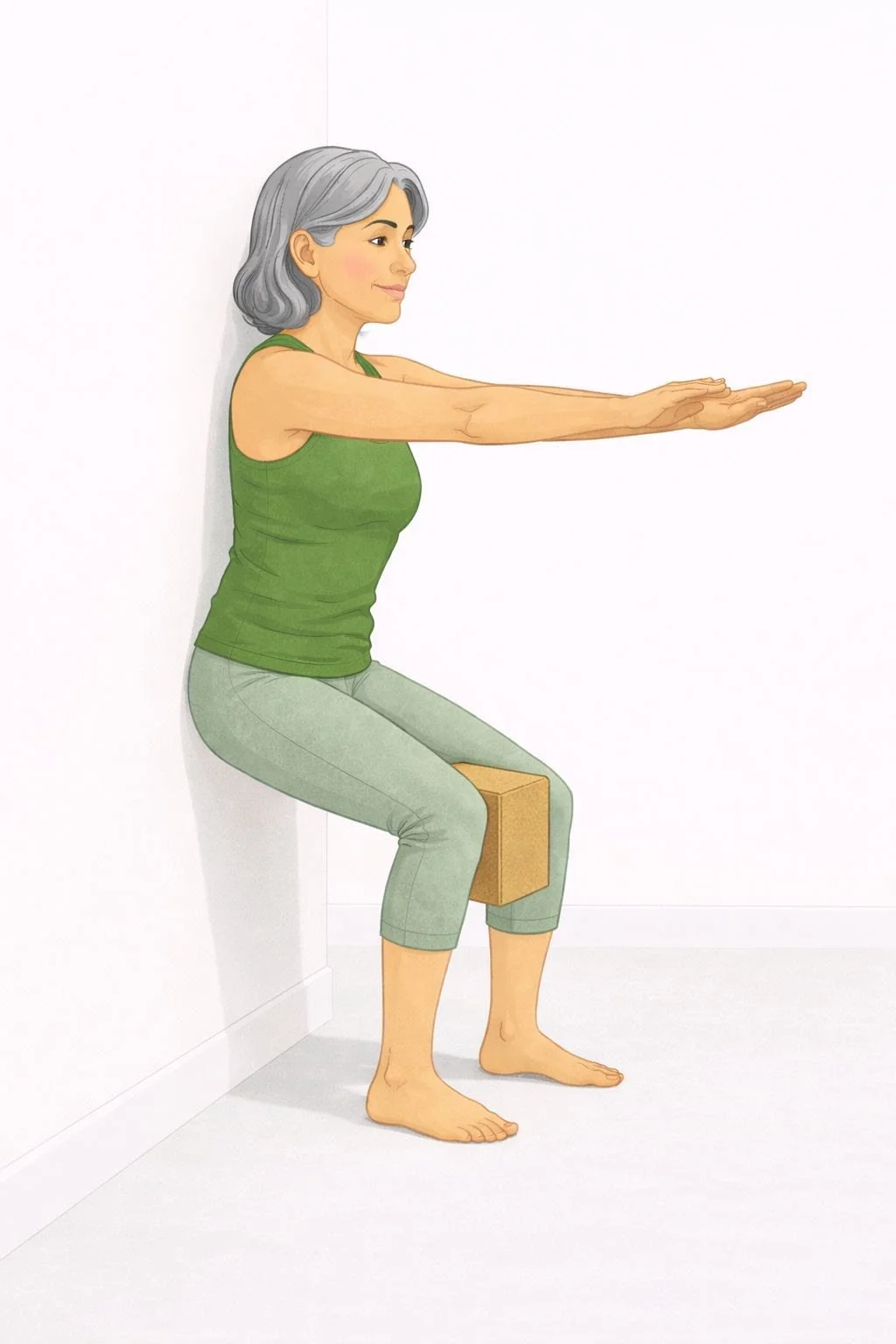
It rebuilds quad strength and knee stability in a controlled environment, which is what gives the knee confidence to load again gradually.
How to do it:
Stand with your back against a wall, feet hip-width apart, and a few inches forward
Slide down until your thighs are at a comfortable angle, not necessarily parallel to the floor
Hold for 5 breaths, slide back up, repeat 3 times
Modification:
Don't go lower than where you feel steady. Even a shallow bend is building the right patterns. Place a block between your knees if they tend to fall inward.
What to notice:
Are your knees pointing in the same direction as your feet, or falling inward toward each other?
Inward collapse is the compensation pattern showing up in real time. A block between the knees helps correct this gently.
Closing Reflection
Coming back to a practice after injury takes a particular kind of patience.
Not the patience of waiting, but the patience of rebuilding something carefully, without rushing toward who you were before.
The knee that has been through something is still your knee. It's still worth showing up for.
Know someone navigating injury or coming back to their practice? Forward this to them. It might be exactly what they need today.
P.S. If there's something you're navigating in your practice, an injury, a limitation, a question you keep coming back to, hit reply and tell us about it. The more you share with us, the more we write about what you actually need.