Dear Y.T. (Yoga Therapist): A Column for the Questions You Didn't Know You Could Ask
Welcome to the column for the questions you think about in yoga class but don’t ask. Now you can get an answer.
Hi, I'm Ronny, a yoga therapist and your willing guide into all things body, breath and being human. Whether you're wondering why your hip flexors are staging a revolt, how to actually apply the Yamas (or what the H. is a Yama) when your coworker drives you nuts, or what on earth the koshas have to do with your anxiety — this is your space to ask. No question is too small, too strange, or too woo-woo.
Bring me your tight IT bands, your sleep trouble, and everything in between. I'll give you my honest - Yoga therapist-informed, occasionally hot take.
This week's question comes from a yoga student about their I.T. band.
“Dear Yoga Therapist,
I really liked the article and poses on the knee. With two knees that no longer provide the support I need, I keep focusing on what I CAN do and improvements I can feel and see.
For two years I’ve been dealing with a tight IT band on one leg.
Acupuncture, massage, stretching and yoga have helped.
But just as I was feeling much better, I’m back to the beginning. I’ve seen that athletes deal with this issue also. Perhaps you can address this in an upcoming newsletter on how to prevent IT bands from getting tight and what to do - or avoid doing - if you are dealing with this issue. Thank you!
I have learned so much since coming to the studio. I no longer feel restricted to a chair class because I have learned so many modifications.
Signed, Tight Bands”
Dear Tight Bands,
Thank you for writing! First of all, can we begin with a rousing round of applause! Your self-care routine is on point! Massage, yoga and acupuncture?! Yes Please!
And secondly, If you are working with a doctor or physical therapist, this information does NOT override your treatment plan. Check with your care team before changing, adding to or stopping your treatment plan.
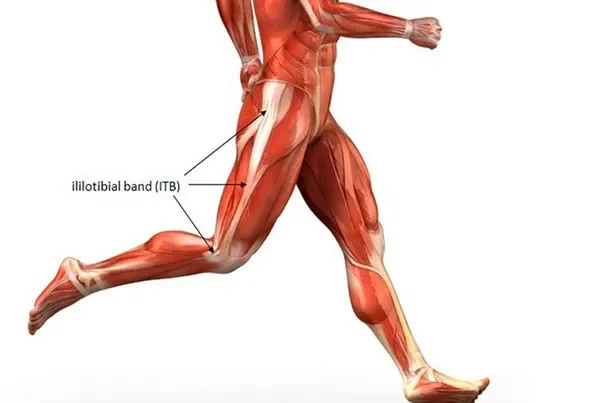
Ok, let's jump in. You may be asking “What is the IT band anyway?” The iliotibial band is a thick strip of connective tissue running from your hip down the outside of your thigh to your knee. It doesn't stretch the way a muscle does — which is why foam rolling feels like a punishment and why it can be so stubbornly persistent. Tightness here can be from the muscle that connects the ITband to the pelvis being tight putting tension on the IT band, but very often it can come from other imbalances that put a load on the IT band it was not really made for.
The IT band itself isn't usually the problem. It's more of a messenger. What's typically going on underneath is a combination of weak glutes that aren't pulling their weight, tight hip flexors pulling the pelvis out of alignment, and the thigh bone rotating inward as a result. Some movement patterns make this worse — like your knees drifting inward when you are in warrior 1 or 2, or one hip dropping as you walk.
The goal isn't to aggressively stretch the IT band (it's too dense to stretch much anyway). Instead, we look at waking up the glutes, releasing the hip flexors, and helping the whole hip-pelvis-knee relationship find better balance. I know one step forward and two steps back can feel frustrating, but if I could offer some perspective, I have heard repeated from my favorite yoga teachers. "Heyam duhkham anagatam," ( yoga sutra, 2.16) Tomorrow's suffering is preventable today. The things we do matter. We may never know what we have avoided by doing the work we do. That is to say, that the absence of pain is not the only marker of “doing it right”. Square one is still familiar territory, and we know how to proceed from there. Healing is rarely a straight line. Two steps forward, one (frustrating) step back is not failure — it's just the actual shape of recovery.
The fact that you've found your way back to your practice, back to what your body can do, is everything.
Keep showing up. We'll keep meeting you there.
With love and slightly less cranky IT bands,
Your Y.T.
As always, if you are experiencing new or worsening pain, please consult with your physician or a qualified healthcare provider before beginning or continuing any movement practice. Yoga therapy is a wonderful complement to medical care — but it is not a substitute for it.